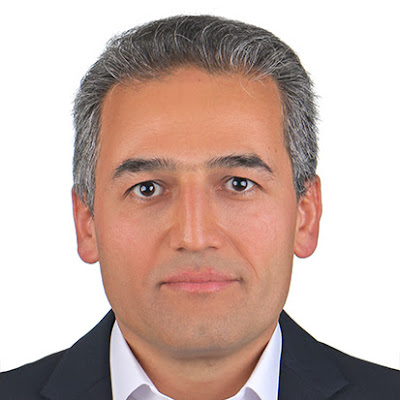
About
I develop mathematical foundations for representation learning and deep models. My work studies how hierarchy, adaptive feature choice, and reparameterization affect the geometry of represented function classes, their statistical complexity, their approximation properties, and the dynamics of optimization. I use reproducing kernel Hilbert spaces and variation spaces together with functional analysis, operator theory, empirical-process methods, approximation theory, and convex and variational analysis.
I completed my doctoral work in Computer Science at the Free University of Bozen–Bolzano, with a focus on machine learning theory. Before this, I completed a Ph.D. in Mathematics, specializing in Functional Analysis, at Islamic Azad University of Mashhad.
The organizing theme of my research is Brownian Kernel Ladders (BKLs): recursive function spaces built from Brownian pullback kernels. The framework separates a full adaptive envelope, used to study representation, regularity, depth, and variational structure, from realized or controlled families, used for statistically accountable estimation. This distinction between representation and estimation recurs throughout my work.
A subsequent project in this research program develops common covariance geometry for the unrestricted empirical BKL union. It studies one minimum-trace covariance whose trace controls Gaussian complexity, whose spectrum gives a common approximation space, and whose active constraints support rigorous numerical certification.
Research program
-
Recursive RKHSs and variation spaces
I study hierarchical function spaces in which depth is encoded directly through recursive Brownian geometry. The BKL framework develops integral-RKHS hierarchies, adaptive infimal complexity, regularity, nestedness, strict depth growth under explicit geometric hypotheses, and controlled-family learning guarantees. The complementary Variation Brownian Kernel Ladder construction postpones signed-measure superposition until the outermost layer, separating nonlinear recursion from linear variation and supporting compactness, attainment, architecture-dependent generalization, and constructive finite approximation.
-
Adaptive representation and empirical covariance geometry
I investigate the statistical price of choosing a representation. For Brownian heads on fixed deep features, the relevant scale is the realized activation mass; when the representation is selected on the same sample, coordinate or projected threshold traces quantify an additional selection cost, including for rectangular and rank-deficient ReLU extractors. For unrestricted adaptive BKL unions, the common-covariance project develops minimum-trace envelopes connecting Gaussian geometry, operator factorization, simultaneous approximation, threshold and graph structure, and semidefinite certification.
-
Representation and optimization
I study how finite descriptions of the same function space interact with optimization. The aim is to distinguish intrinsic properties of the represented model from effects introduced by coordinates, numerical realization, and the choice of optimization procedure. This work combines mathematical analysis with controlled computational studies.
-
Function-space methods for multitask learning
I study mathematical approaches to multi-output and multitask learning in which shared representations and task relations are analyzed at the level of functions and operators. The broader goal is to obtain principled descriptions of representation, task structure, and generalization that are less dependent on a particular parameterization.
Guiding principle
Across these projects, I seek descriptions tied to represented functions and their geometry rather than to one arbitrary parameterization. I distinguish carefully between structural, statistical, and computational conclusions and state each result within the regime for which it is justified.
Methods and capabilities
Functional analysis and operator theory; RKHSs and variation spaces; statistical learning theory, capacity, and generalization; convex analysis and optimization; approximation theory; variational methods; matrix and operator geometry.
Python, PyTorch, NumPy, SciPy, scikit-learn, and CVXPY; finite element and spectral implementations; convex optimization; numerical certification; reproducible, protocol-locked, and theorem-aligned experiments.
Selected public work
- Brownian Kernel Ladders — project page and research overview
- Brownian Kernel Ladders — arXiv
- Variation Brownian Kernel Ladders — project page and research overview
- Variation Brownian Kernel Ladders — arXiv
- Common Covariance Geometry and Certification for Brownian Kernel Ladders — project page and research overview
- Common Covariance Geometry and Certification for Brownian Kernel Ladders — Figshare preprint and DOI
- Sample-Weighted End-to-End Trace-Norm Geometry for Multitask Learning — Figshare preprint and DOI
- Google Scholar profile — complete publication record